CARMA
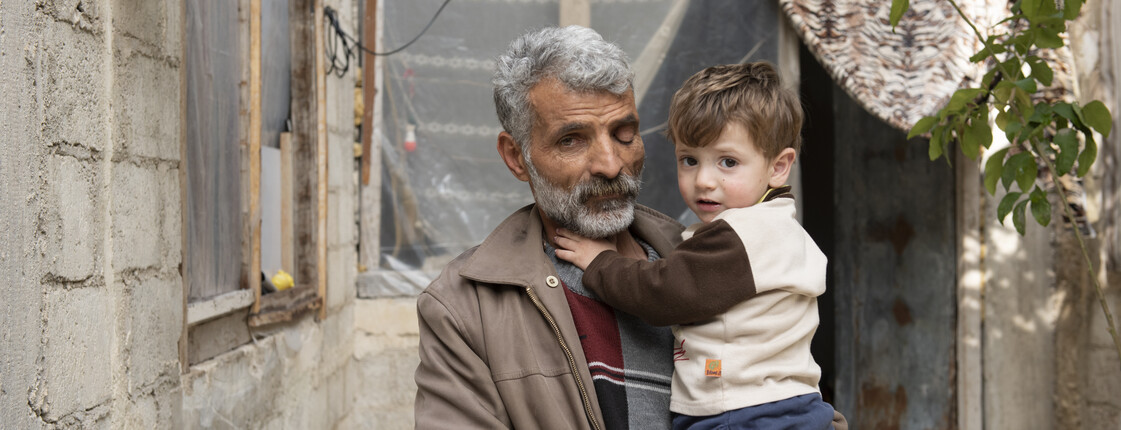
We provide humanitarian assistance, healthcare, psychosocial support, and help people rebuild their livelihoods © Hasan Belal / Caritas Schweiz
Humanitarian aid for people affected by multiple crises in Syria
For years, Syria has been affected by multiple crises: the ongoing conflict since 2011, a severe economic and food crisis, the consequences of the devastating earthquake in February 2023, and more recently the transition to new authorities. Following the fall of dictator Bashar al-Assad, Syria remains deeply fragmented. Different groups control different areas, and borders remain unstable. In summer 2025, violent clashes in southern Syria caused dozens of deaths, widespread destruction, and new displacement.
For many people, access to water, food, and medical care has become increasingly difficult. These overlapping crises reinforce one another and have devastating effects on the Syrian population. More than 16.5 million people are now in need of humanitarian assistance.
The Caritas projects CARMA (Cash Assistance in Re-Emerging Markets in Syria) and HEAL (Health Equity and Access to Livelihoods Support in Syria) support people particularly affected by these prolonged crises.
CARMA is funded by the European Union, while HEAL is funded by the Austrian Development Cooperation.
After conflict came poverty and hunger
In addition to the consequences of the Syrian conflict, the population has also been struggling with a severe economic crisis since 2019. Since then, the Syrian pound (SYP) has continuously and dramatically lost value — with devastating effects on everyday life. Between 2019 and 2022, the general price index increased sixfold, while food prices rose sevenfold. As a result, even basic food supplies have become barely affordable.
Today, more than 14.6 million Syrians are affected by food insecurity, including over one million children suffering from malnutrition. Around 75% of children do not receive enough nutritious food to stay healthy and develop properly. In order to provide for their families, many people are increasingly forced to take serious risks just to meet their basic needs.
The reality is that after years of crisis, people in Syria are gradually losing hope that their lives can return to normal.
How Caritas helps
Through the CARMA and HEAL projects, Caritas provides support including:
- emergency assistance for especially vulnerable families — while preserving people’s flexibility, dignity, and self-determination
- access to essential healthcare
- protection services
- psychological support
- opportunities to rebuild livelihoods — helping communities remain safe, healthy, and resilient
How the support reaches people
The project “CARMA” (Cash Assistance in Re-Emerging Markets in Syria) provides flexible support for especially vulnerable families who have lost their livelihoods due to years of crisis. Launched together with Caritas Switzerland in 2019, the EU-funded project now supports nearly 6,000 families in rural areas around Damascus, Dar’a, Hama, Homs, Sweida, and Aleppo in meeting their basic needs.
Overall, more than 17,000 people benefit from essential assistance and protection services.
The HEAL project (Health Equity and Access to Livelihoods Support in Syria) supports families and individuals in some of the regions most severely affected by the crisis in Syria — especially women, children, older people, and people with disabilities — who continue to live with the consequences of displacement, insecurity, and limited access to basic services.
By providing essential healthcare, protection services, psychosocial support, and opportunities to rebuild livelihoods, the project helps communities remain safe, healthy, and resilient. Through community-based initiatives, local communities can also independently implement projects that benefit the wider public.
In Tartus, Homs, and Hama, the project reaches more than 34,000 people and provides not only immediate support, but also the opportunity for stability, self-determination, and renewed hope for the future.
The project is implemented together with the local partner organisation GOPA-DERD and funded by the Austrian Development Cooperation.
Reliable partners in times of crisis
CARMA Project
The CARMA project is funded by the European Union and additionally supported through financial and technical assistance from consortium partner Caritas Switzerland. In Syria, the project is implemented directly together with our partners Caritas Syria and GOPA-DERD.
Our project partners
Funding
HEAL Project
The HEAL project is funded by the Austrian Development Cooperation and implemented by GOPA-DERD.